The Architecture of Solitude: Morning Hours in Kyoto
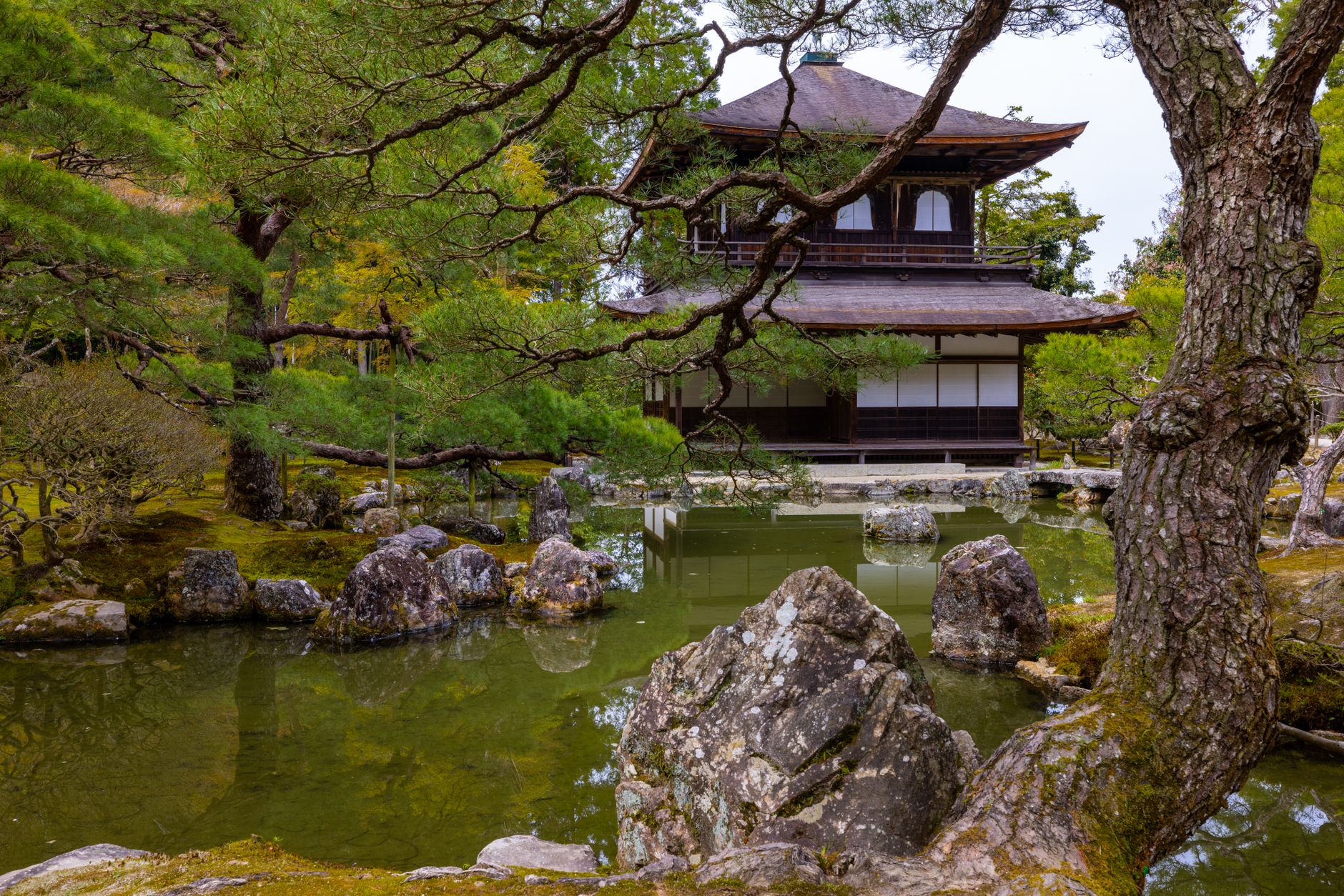
At five-thirty in the morning, before the tour buses rumble into Higashiyama, Kyoto belongs entirely to the morning ravens, the moss-gatherers, and the mist rolling down from the Higashiyama hills.
We walk along the Shirakawa stream where water glides over smooth basalt cobbles. The wooden facades of Gion-Shirakawa are still dark, their timber lattices (machiya) shielding sleeping families. There is a specific scent to this hour: cedar rain-gutters, damp earth, and the faint, sweet vapor of steamed rice escaping back-alley ventilation pipes.
1. The Discipline of the Raked Gravel
In Ryoan-ji, the fifteen rocks arranged in five groupings on white kaolin clay have confounded scholars for centuries. Yet to understand the garden, one must not seek an intellectual puzzle; one must simply sit on the cedar veranda and listen. When the wind moves through the surrounding cryptomeria pines, the mind stills. No matter where you sit along the veranda, you cannot see all fifteen stones at once—an architectural reminder of human incompleteness and humility.
“To build a courtyard is not merely to enclose space with walls; it is to invite the sky, the rain, and the passing season to take residence inside your house.”
— Master Carpenter Keizo Shimizu, Kitayama2. Water and the Way of Tea
Two kilometers north, tucked behind Daitoku-ji, we meet with a sixth-generation tea master. In his small, four-and-a-half tatami mat room, every structural member is deliberately humble: unpeeled cedar bark pillars, earthen plaster showing straw fibers, and a low crawl-in entrance (nijiriguchi) that forced even feudal warlords to leave their long swords outside and bow their heads.
The water used for the kettle is drawn from a nearby subterranean aquifer that has filtered through volcanic gravel for four decades. Its low mineral content creates an astonishingly smooth infusion, magnifying the umami notes of stone-milled Uji matcha.
3. Practical Reflections for the Discerning Traveler
If you seek this tranquil cadence, shun the midday tourist corridors entirely. Wake with first daylight, wander through the open sub-temples of Nanzen-ji, and spend your afternoons resting in quiet riverside ryokans. True Kyoto is not something to be conquered; it is an atmosphere that slowly settles into your bones.